What Makes a Smash Burger Different (And Why It Matters)
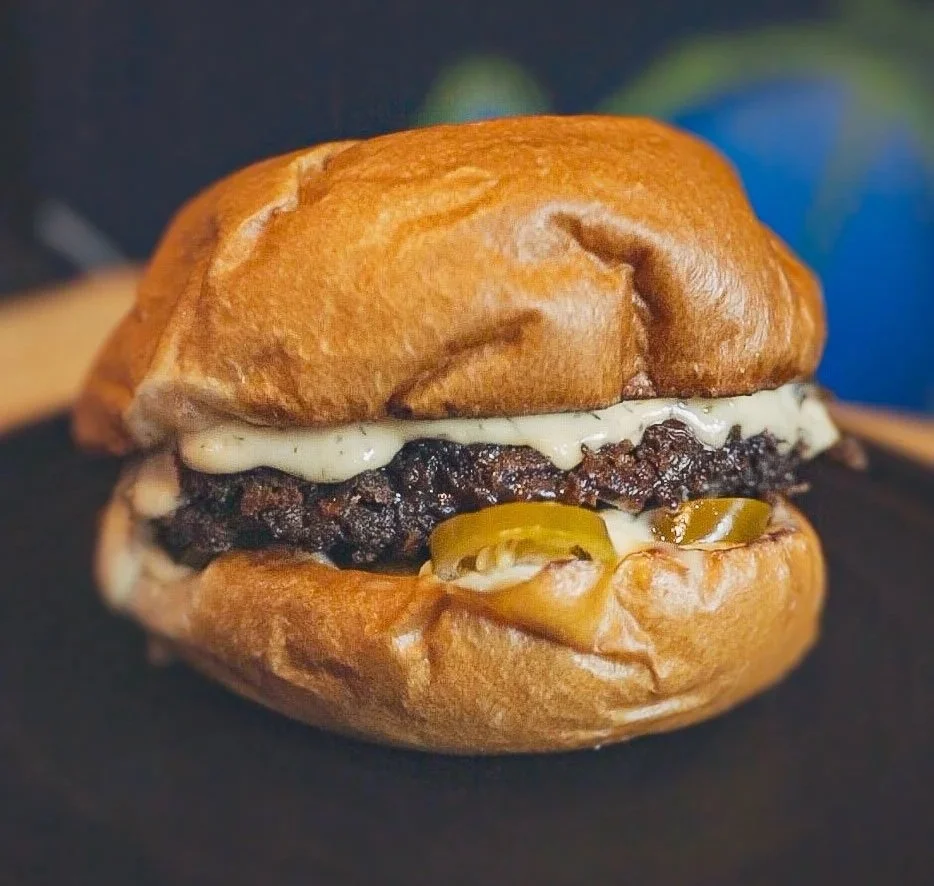
Fat Puku's Big Poppa smash burger with Matangi Angus beef, house-made Ranch, jalapeños, and cream cheese, Auckland
A smash burger starts with a ball of beef and a very hot griddle. What happens next is the whole point.
This isn't a different name for the same burger. It's a different technique, a different result, and if you've had a proper one, you already know. If you haven't, that's what this is for.
Smash burgers are available across Auckland now. Here's what separates the real ones from everything else.
The Crust Is the Point
When beef hits a scorching hot griddle and gets smashed flat, you get direct contact across the whole surface, not just the outside edge. That contact, that heat, that fat rendering instantly, that's what creates the crust.
The Maillard reaction is the science behind it. Proteins and sugars in the beef caramelise under high heat and pressure. The result is a dark, crispy, slightly charred edge that doesn't happen any other way.
That crust is not a side effect. It's the whole reason to smash.
Why the Patty Needs to Be Thin
A thinner patty means more surface area in contact with the griddle. More surface area means more crust per bite. That's not a compromise on size, it's the goal.
A thick gourmet patty and a smashed patty are two different things with two different purposes. One's aiming for a juicy centre. The other's aiming for maximum crust-to-meat ratio. Neither's wrong, they're just not the same burger.
Most places that do smash burgers run doubles. Two thin patties, more total crust, still plenty of beef. That's the sweet spot.
The Beef Has to Do the Work
Fat content is what makes smash burgers work. When a ball of beef with 20%+ fat hits a hot surface, the fat renders immediately. That's the flavour. That's the drip. That's what makes the bun worth eating.
At Fat Puku's we use Matangi dry-aged Angus beef. Matangi is a boutique farm in the Tuki Tuki valley, Hawke's Bay. Angus cattle, grass-fed, dry-aged on the bone for 21 days. After ageing, it gets minced to our own ratio. Most places run 80/20. Ours is different. That's not something we're putting on the internet. The dry-aging concentrates the flavour before the patty even hits the griddle. It's not a flex, it's just what the technique needs.
Lean beef on a smash burger doesn't work. You lose the render, you lose the crust, you lose the point.
The Bun Matters More Than People Think
A potato bun absorbs moisture without going soggy. It toasts evenly on the griddle. The texture is soft but it holds structure, it doesn't turn to mush under the weight of two patties and sauce.
A lot of places use whatever bun is cheapest and call it a day. The bun is carrying everything, it's not the place to cut corners.
The ratio of bun to patty to sauce also matters. Too much bun and you're eating bread. Too little and it falls apart. A potato bun sized right for a smash patty hits the ratio properly.
What a Smash Burger Isn't
It's not fast food. The technique takes skill, the smash has to happen at the right moment, the crust has to form before the flip, the cheese has to melt on the patty, not off it. Do it wrong and you've got a flat, overcooked disc.
It's not a gimmick. The burger doesn't need twelve toppings or a sauce with a story. The technique is the content. If the beef is right and the griddle is right, the burger doesn't need to try hard.
And it's not just a trend that's going to disappear. The smash burger is popular because it's a genuinely good way to cook beef. The physics work. The flavour works. It's not going anywhere.
Where to Get a Proper Smash Burger in Auckland
Fat Puku's runs two spots in Auckland. Queen Street in the CBD and Jellicoe Street in Wynyard Quarter. Both full table service, both smashing Matangi beef to order.
No booking needed for lunch. Walk-ins welcome at both locations.
Queen St or Wynyard. Pull up.